It Wasn't The Aliens
The rise of a technological species on earth doesn't require Aliens. It requires comprehension of what 500,000 years will do to [a] Man.

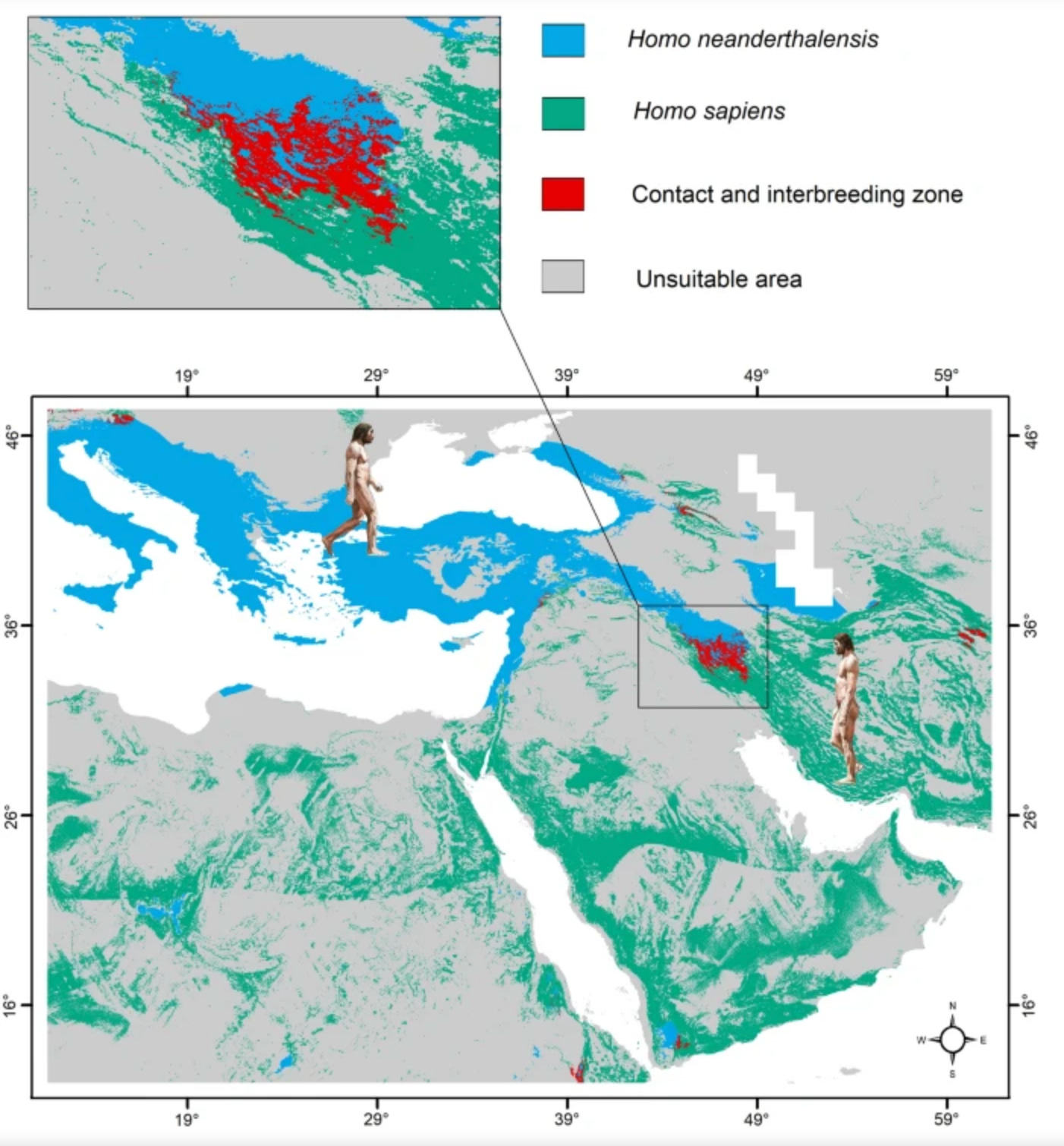
Much of humanity’s rise to global dominance in the Anthropocene is owed to our success in finding ever more efficient means of calorie and resource extraction from the natural world. Our cognitive capabilities and taste for meat enabled successive out-of-Africa migrations in which our genus colonized continents at unprecedented speeds. The final episode of emigration to Eurasia some 50 kya (perhaps from an Arabian launchpad) led to a few northern branches that developed mammoth hunting skills just like the Neanderthal competitors and cohabitants.
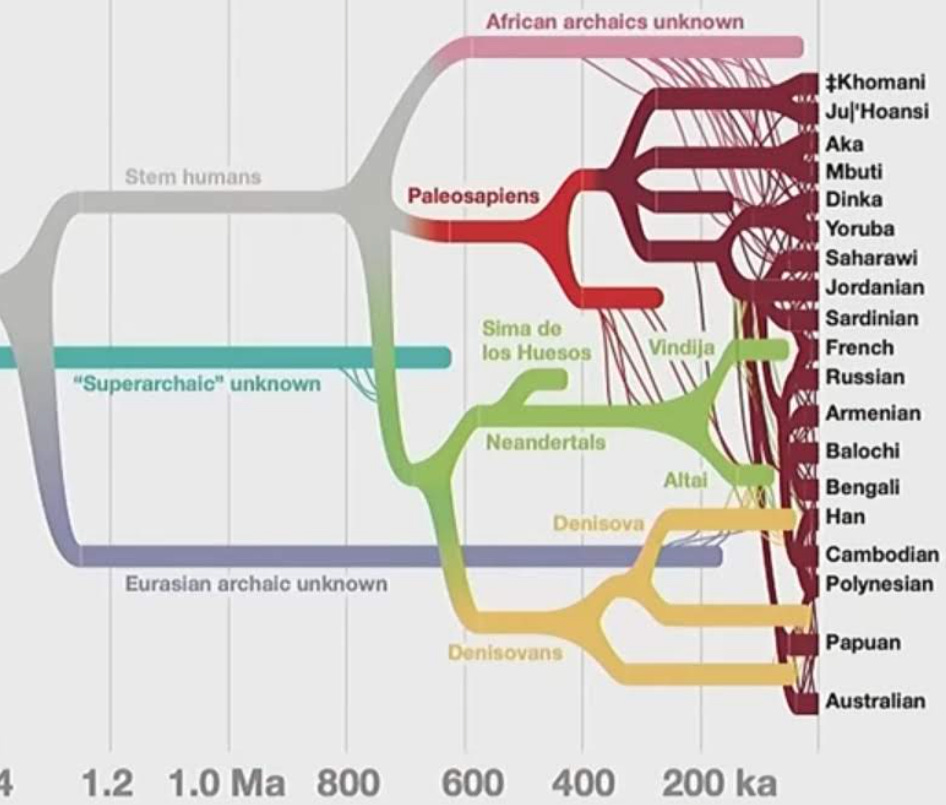
Successful establishment in a new environ is no small task - plant identification, disease risk, and of course climate adaptation are all difficult but necessary steps for permanent residence. I suspect the fact that any animal larger than your fist could be safely eaten over a fire was the only reason we had a chance to try our hand at those other challenges. The latest best evidence in late 2024 suggests that it was a single hybridized Sapien x Neanderthal population around 50 kya that gave rise to all later successful Eurasian dispersions - and tons of failed ones too.
At least in Europe, we don’t think the successful Sapien colonists interbred with Neanderthals again, despite 5,000 years of overlapping range.
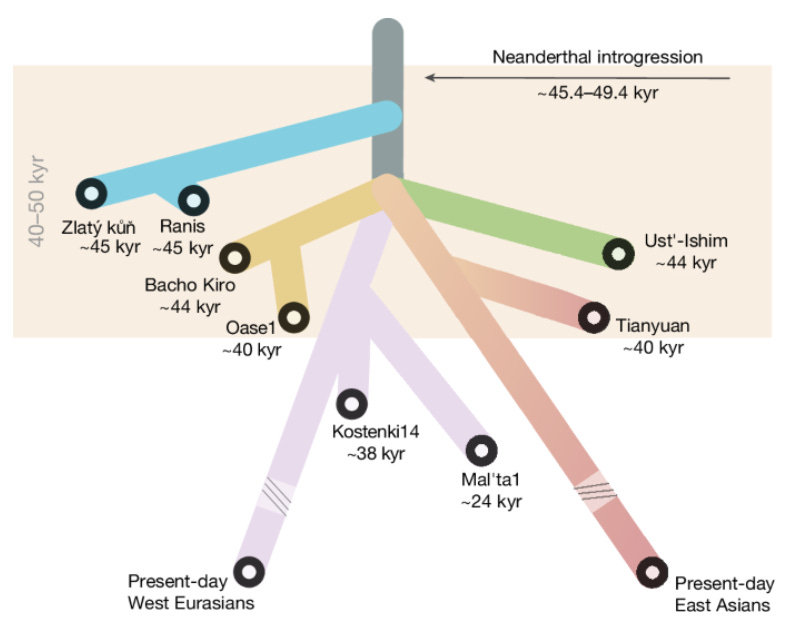
This could be due to avoidance behaviors, or merely the low chance of encountering just 2,000 breeding Neanderthals across all of Europe. Nevertheless, the first major wave of modern men in Europe (belonging to Y Haplogroup C) almost all died without a trace, while their close cousins found success further east, and even into the Americas much later. They too had substantial Neanderthal DNA from that original event in the launchpad and hunted mammoth, but it clearly wasn’t enough. I admit it seems rather surprising that no further mating events between Sapiens and Neanderthals contributed to modern ancestry in Europe - just the single brief period before major expansion.
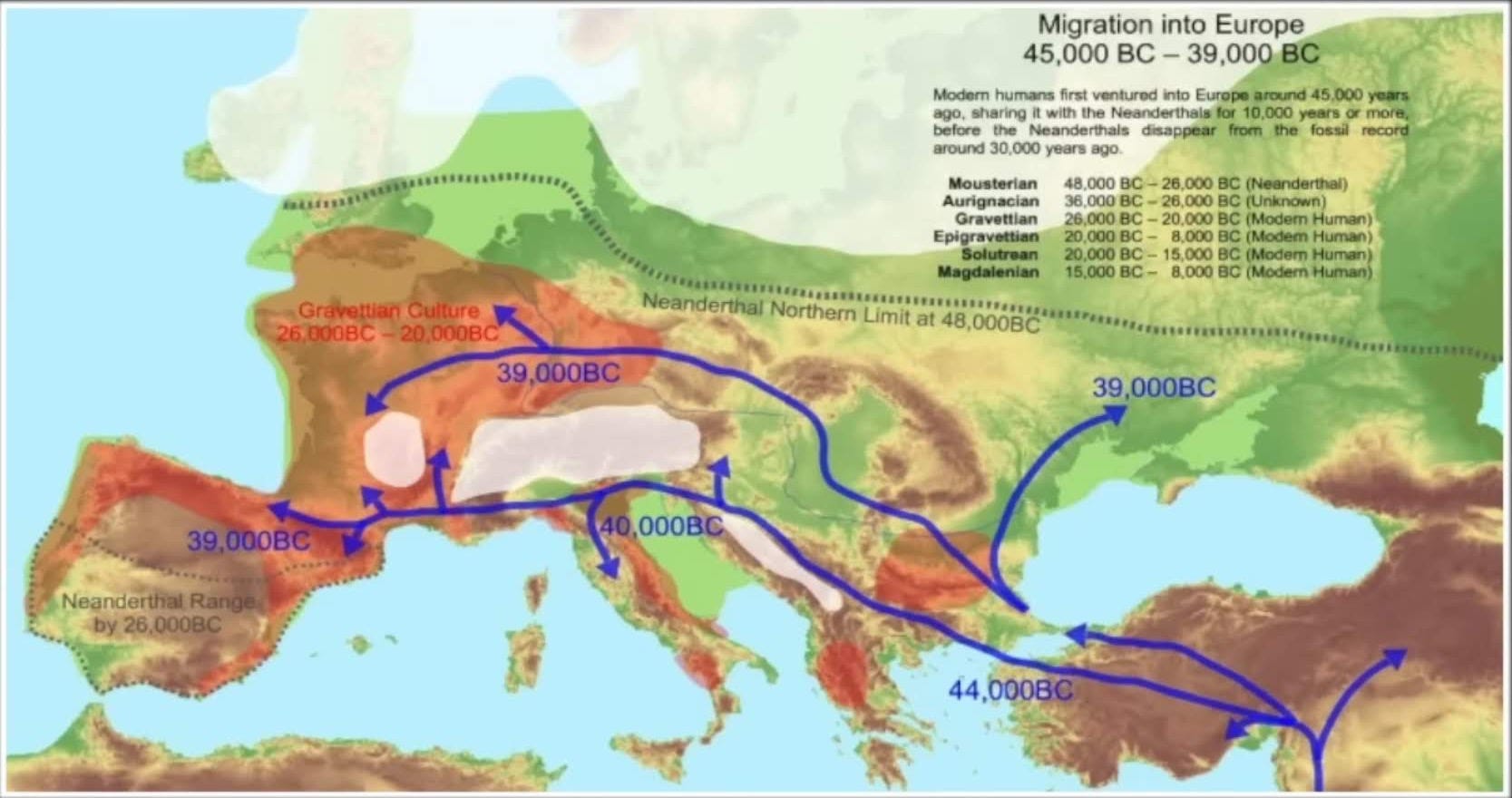
Only thousands of years later did we try again, this time for good, evinced by Y haplogroup I. After a brief few thousand years, the Neanderthal DNA was already reduced to its current proportion, around 2-5% of any given individuals DNA. This seems to be partly selection, and partly a number game, given our lineages propensity for larger groups that likely outnumbered Neanderthals. We also do not observe any Neanderthal Y Haplogroups, indicating perhaps some gender based reproductive bottlenecks in Sapien x Neanderthal hybrids. Similarly, the Neanderthal Y chromosome may have been completely replaced by a Sapien version long before waves of Sapiens entered their Eurasian territory, via a back-to-africa migration of Neanderthals hundreds of thousands of years ago, which eventually diffused back through the Eurasian population. Presumably, low population numbers in Eurasia and the resultant genetic drift and inbreeding, meant that the newly bestowed Y chromosome and other traits conferred substantial fitness advantages once back on the home turf.
It’s believed that these modern humans owed their greater success in Eurasia (in terms of population sizes) than previous Homo lineages to larger group sizes, more collective knowledge, and key advancements in tools and other cultural practices. But life appears to have been conducted largely in the same manner as the Neanderthals had done for more than 500,000 years - hunt what you can, find shelter where you can, migrate when needed, trade members with long distance neighbors to stay healthy, and try to survive the bitterly cold winter. Of course, not-so-cold refugia persisted through it all, such as in southern Spain, and a cozy life could be lived picking sea shells by the sea shore.
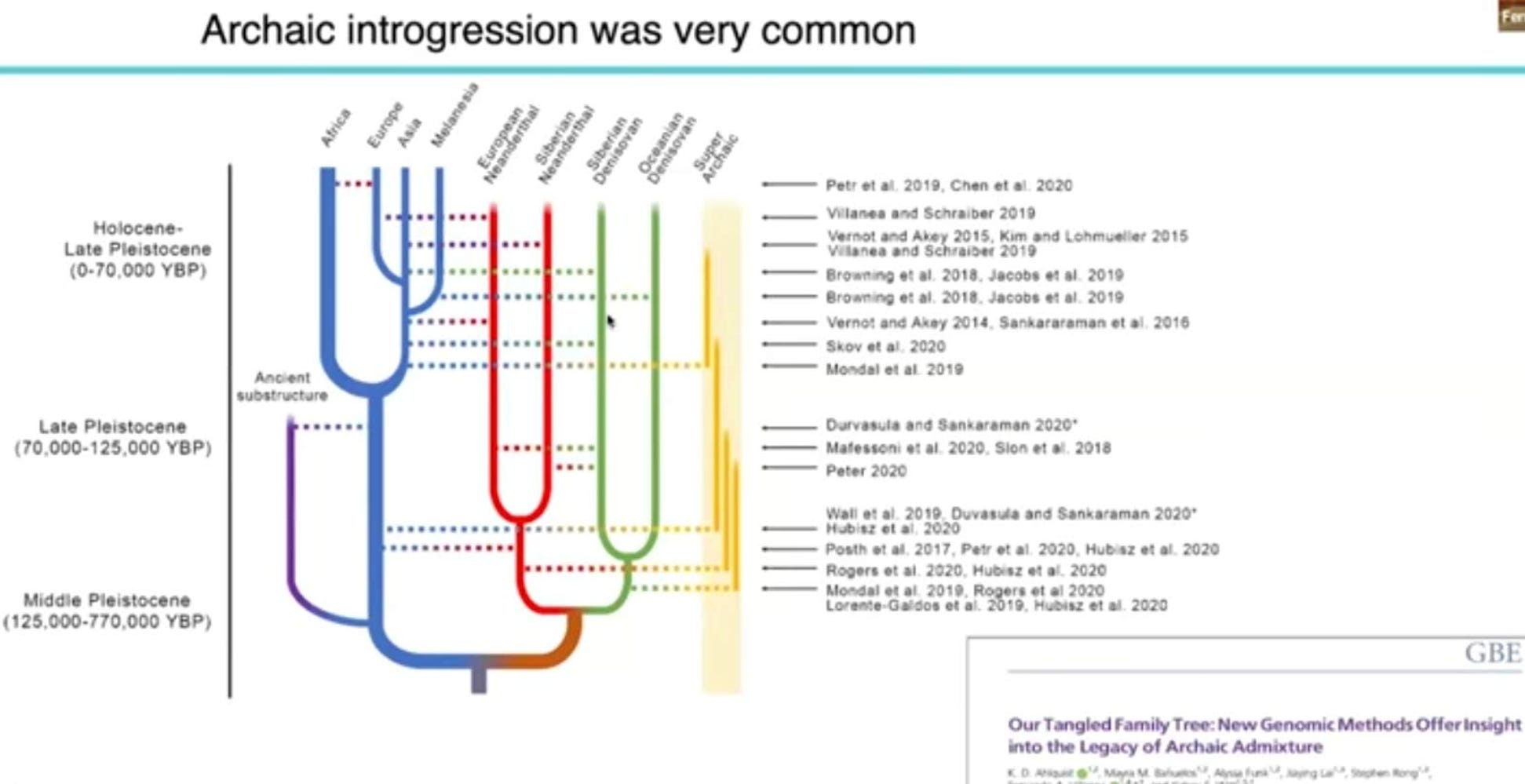
To be sure, stone tool technologies changed with game availability, small scale settlements arose, and new lineages from the east and southeast came in, along with climate and competition driven migrations within Europe. Heck, even long distance trade of quality stone and other items happened at continental scales during this time. But for nearly 40,000 years after Sapiens first foray into Europe, surprisingly little changed.
As we all know, humanity truly changed with the invention of agriculture. It’s likely that the hunter gatherers that came before practiced some amount of ecosystem management, as seen in the native Australians. But what really matters for a step-change in human capability is the amount of calories per land area that could be harnessed - and for how long before you had to move. Previous jackpots like the mammoths entailed frequent long distance migration, and eventually they went extinct through a combination of over-predation and climate. Only when the annual cycle of storage, planting, and harvest of grains was discovered and adopted in the Near East, would Europe see a real change in human lifestyle.
Some 12,000 years ago in the Fertile Crescent, inspired and enabled by the ebb of overflowing rivers, modern humans carried the genetic remnants of their own Neanderthal ancestors into the agricultural age of west Eurasia. While this lifestyle was low on protein and high on the glycemic index, it brought a certainty and stability to life that we’d only ever experienced in the happiest of oasis and refugia this side of the Mediterranean and Sinai. They were fruitful and multiplied, and began to suffer for the first time the consequences of high population density. The success of their way of life meant more children, and over time, over-crowding. Through a process of demic diffusion, these people gradually spread northwest to the fertile lands of Europe, one farm at a time. Throughout the 4,000 year process of diffusion into Anatolia and north-westward across Europe, hunter gatherers were always on the edges.
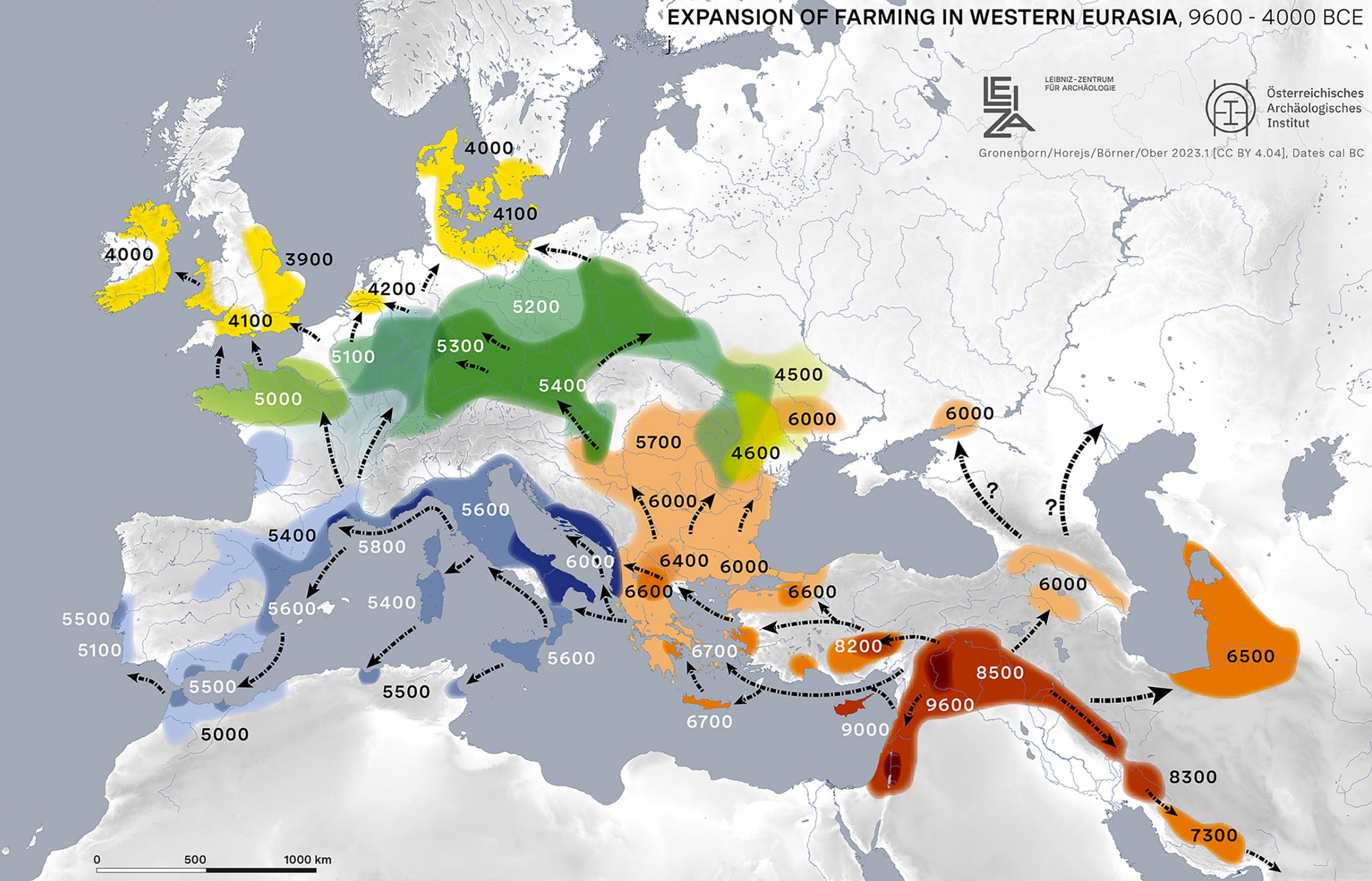
These early European farmers were short in stature, and hadn’t seen, let alone hunted, many of the wild animals of Europe for thousands of years. By comparison, the hunter gatherers were tall, expert hunters with incredible plant knowledge. Perhaps similarly to prior waves and displacements, we observe the almost all of the hunter gatherers disappear as the EEF move in. But as with the Neanderthals, they left something behind, and this time it even included some male lineages. Once again love prevailed, and the long lost cousins of the early farmers survived in the gene pool of the farmers for thousands of years. Today in the Balkans, the male hunter gatherer lineage Haplogroup I makes up about 20% of the population, and is observed to have undergone a revival during the Neolithic after initial swamping. To my mind this suggest some advantages were conferred, even if farming was on balance the better system.
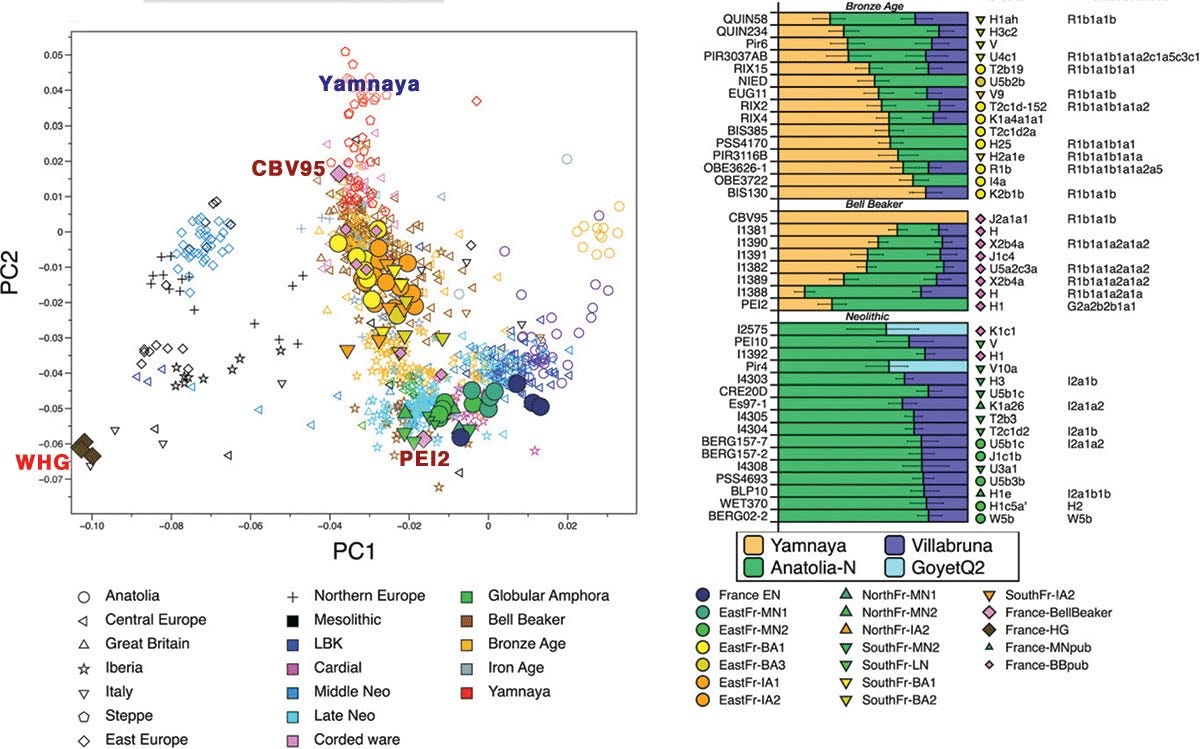
This 4,000 year sojourn across Europe entailed continual selection (natural and artificial) upon the grains and livestock that sustained their journey, and on the people who made it. This wave crested all the shores of Europe - even the furthest reaches of the British Isles. Here again we see that male hunter gatherer lineages survived (Haplogroup I2), while the majority of DNA becomes Neolithic farmer. Admittedly, it’s still unclear if this hunter gather lineage truly persisted through it all, or if it came back to the island after a long absence. But Chedder Man suggests it was there all along. So by 5,000 years ago in the far west reaches of Europe, we have a Neanderthal x European HG hybrid, hybridizing with and acculturating to a Neanderthal x Near East HG X SE Europe HG three-way cross. It was these mutts that built stone-henge (and a lot of other monumental burials/ceremonial structures around Europe).
While hunter gatherers likely influenced ecosystems of Europe though trophic cascades, their impact is negligible to the landscape scale forest clearing and land use conversion the farming required. It was this era that largely gave us the landscape of today. But not all regions were suitable for grain farming. In the far north where the mammoth roamed, nomadic people adopted some farmer technologies and genes, but remained descendants of the hunter gatherer lines rather than being an offshoot of farmer hybrids. North of the Black Sea, they domesticated horses and other animals, and made carts for their long distance journeys.
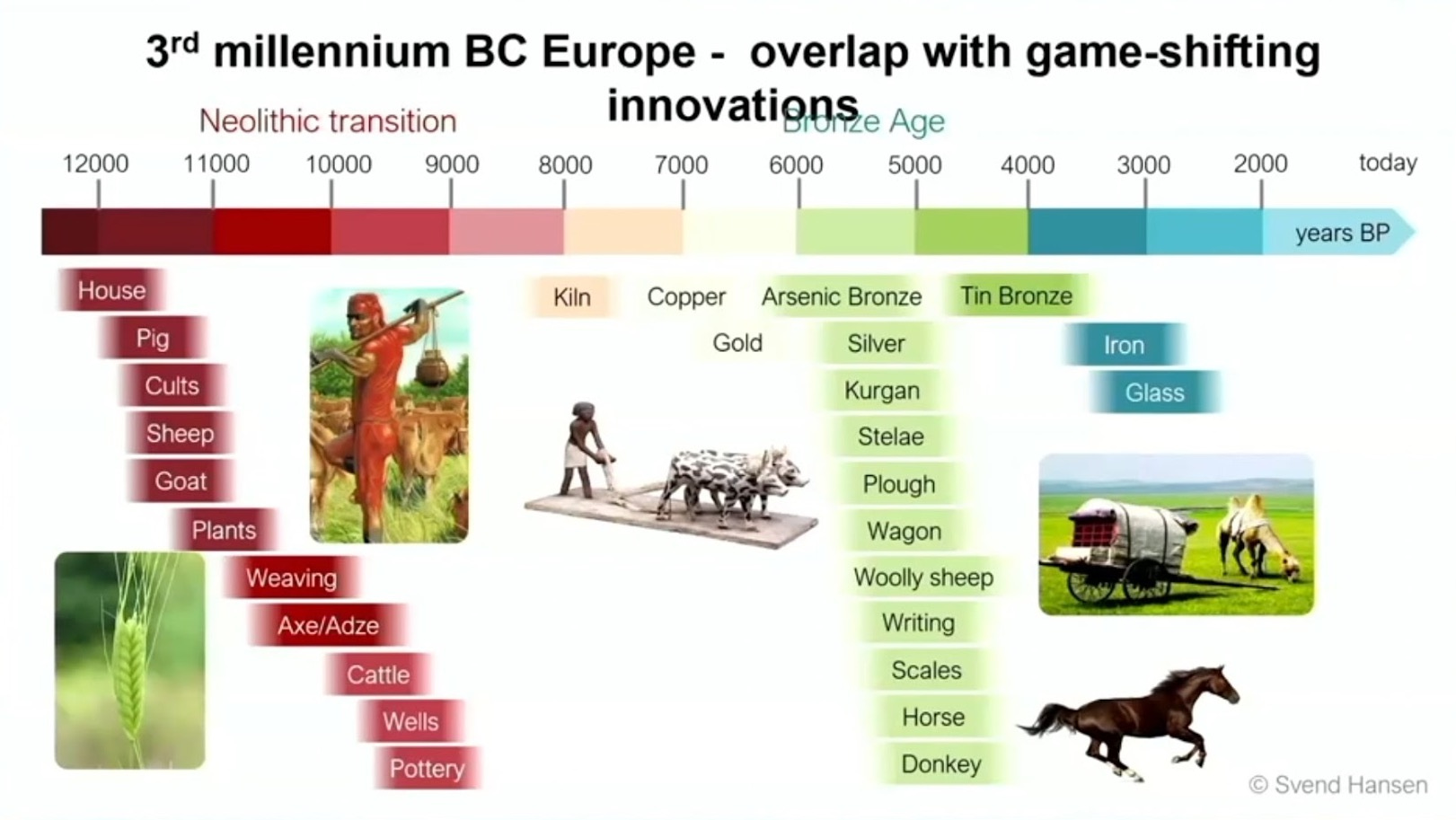
After just a few thousand year reign across Europe, the farmers would be swept over by these tall blue eyed nomads and their horses. Perhaps as with later episodes of steppe migrations in recorded history, a series of dry years meant little grass for their herds, forcing this exodus. Whatever the reason, sweep they did, from the Black Sea to the Balkans and Baltic, the Mediterranean and Atlantic, the North Sea and Scandinavia. These Yamnaya came and no farmer men were left - except for the hunter gather lineages. We see a complete extinction of the male farmer Haplogroup G2, while Haplogroup I and I2 survived (and even thrived in the Balkans). But everywhere, the Yamnaya Haplogroup R became utterly dominant, while plenty of farmer DNA (from the women) lived on in them.
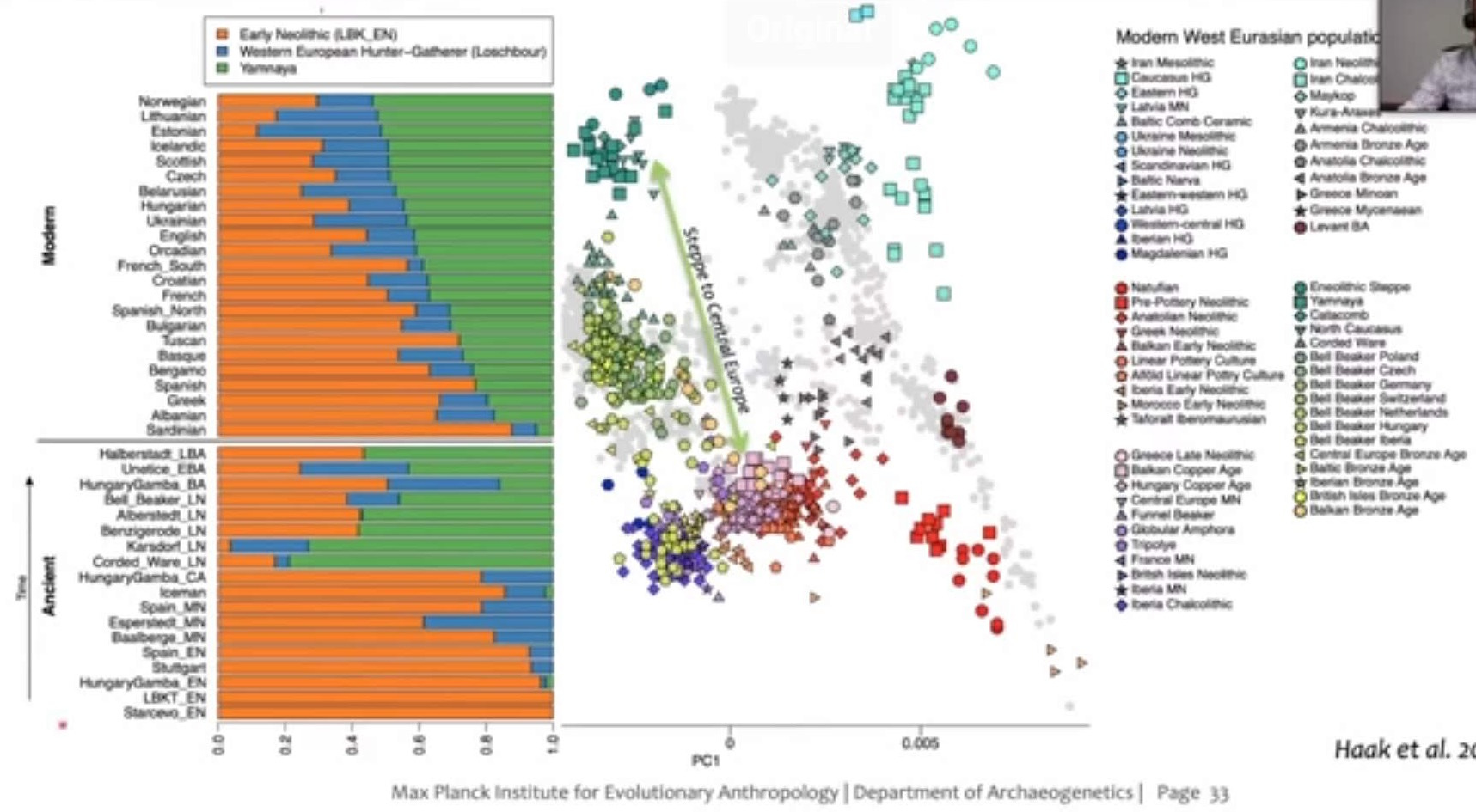
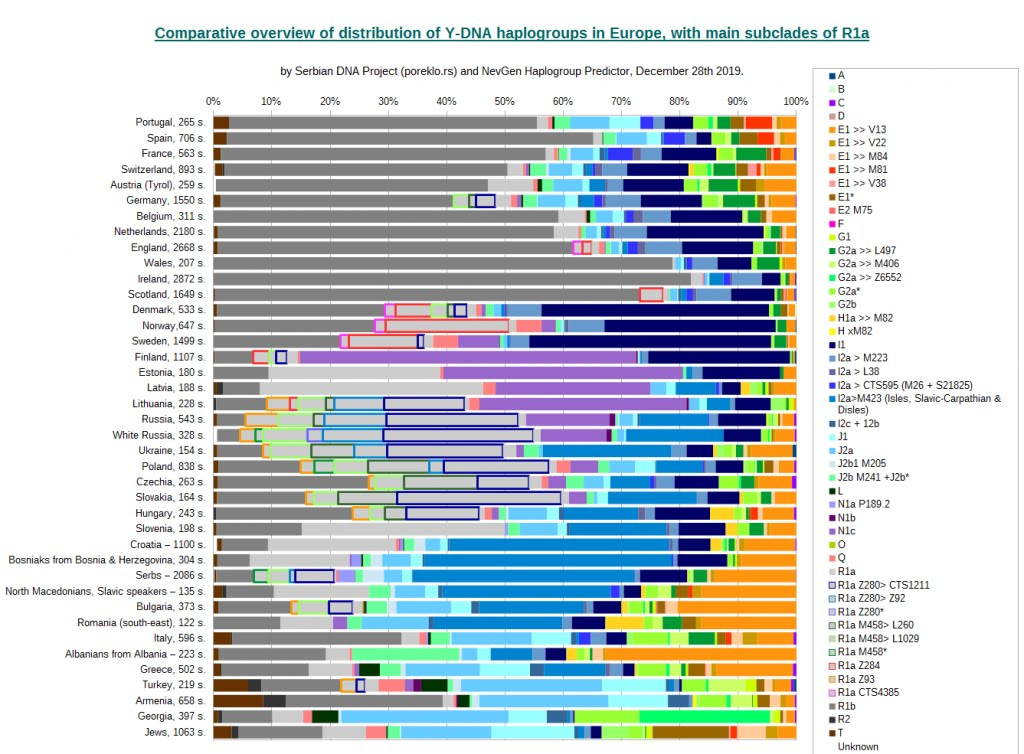
Today their lineages account for the vast majority of European populations (with some later waves adding to the mix like Ottoman in the Balkans, and even more internal mixing like the Hellenic diaspora, Wolkswanderung, Expansion of Slavs). It was their wave that ushered in the way of life that we know today: grain and cattle, horse and cart, sword and shield, warlord and fortress.
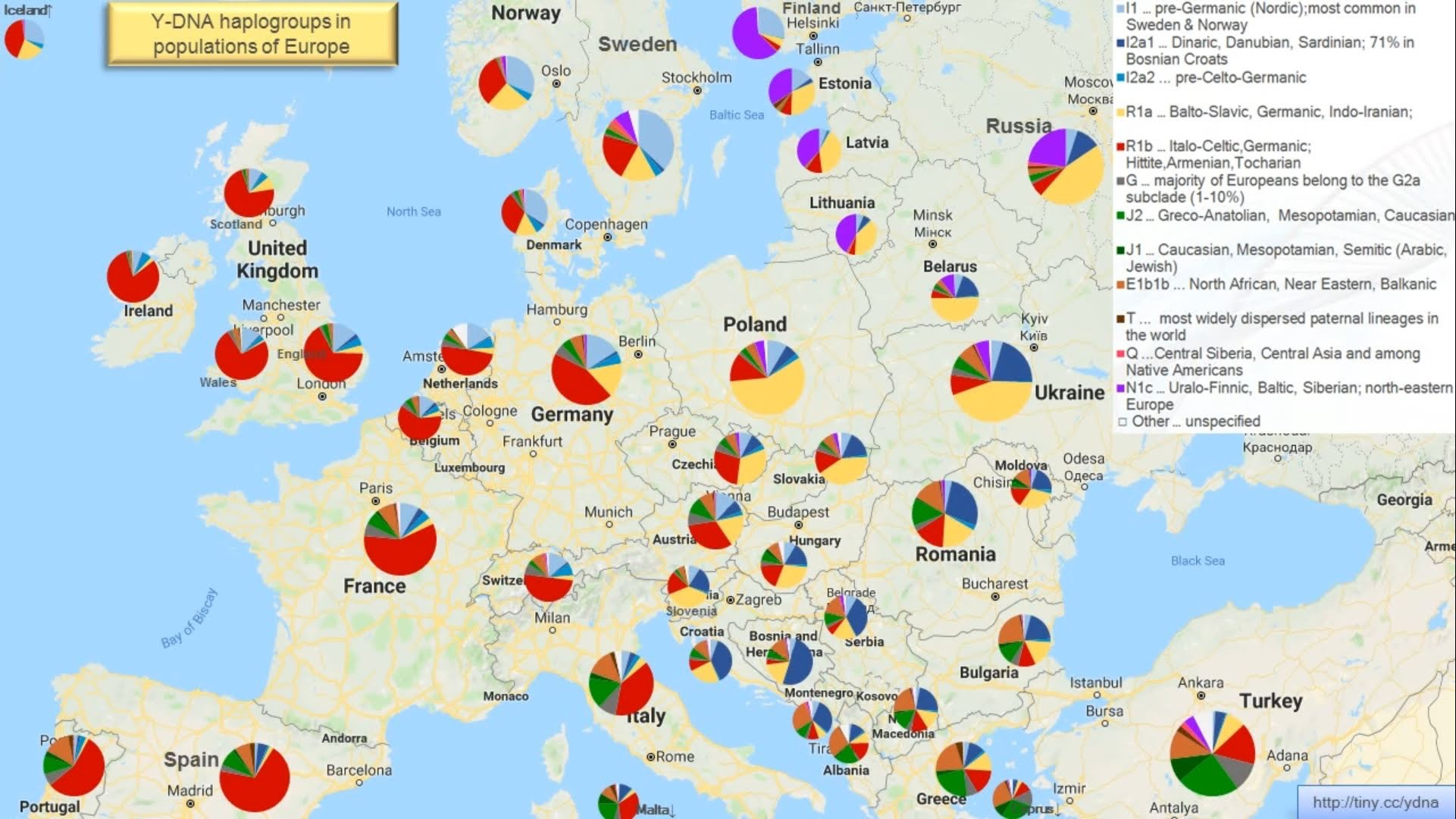
That’s right. The current global order is 5,000 years old and is largely based on a system of agricultural animal husbandry defended and expanded upon by drafted young male surplus under the leadership of a hereditary patriarch. This is essentially the same story, in broad strokes and with different groups, that gave rise to Chinese civilization, and it is the same story as Indian civilization. As we’ve seen, a terribly lengthy preamble laid the groundwork for this combination and culmination of social forces. But in the end, this cultural product is the mechanism that birthed Capitalism and the absolutely jaw dropping, gobsmacking, mind-effing, unbelievable rise in human welfare over the last few thousand years.